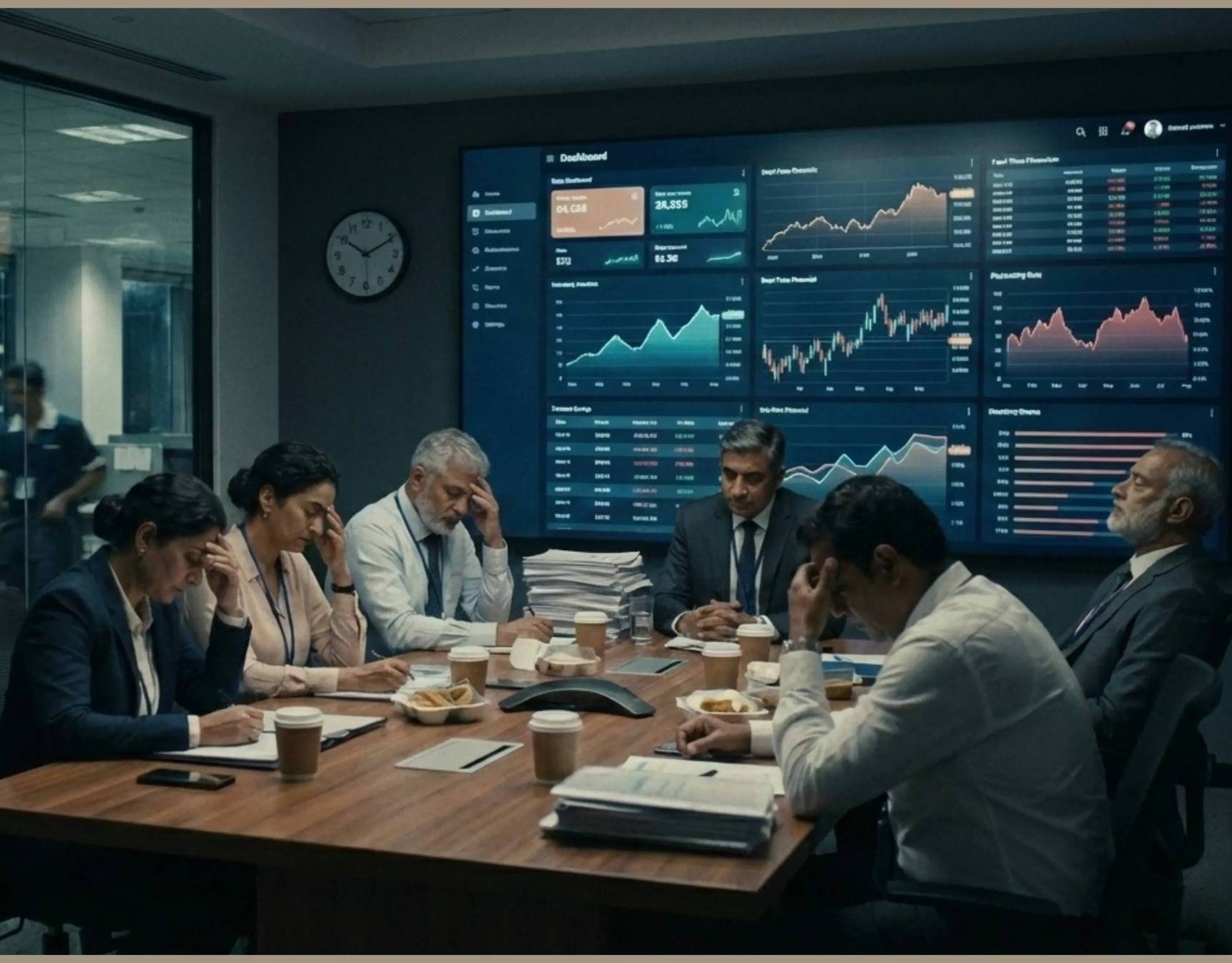
Most leaders don’t burn out because they work too hard. They burn out because everything depends on them all the time.
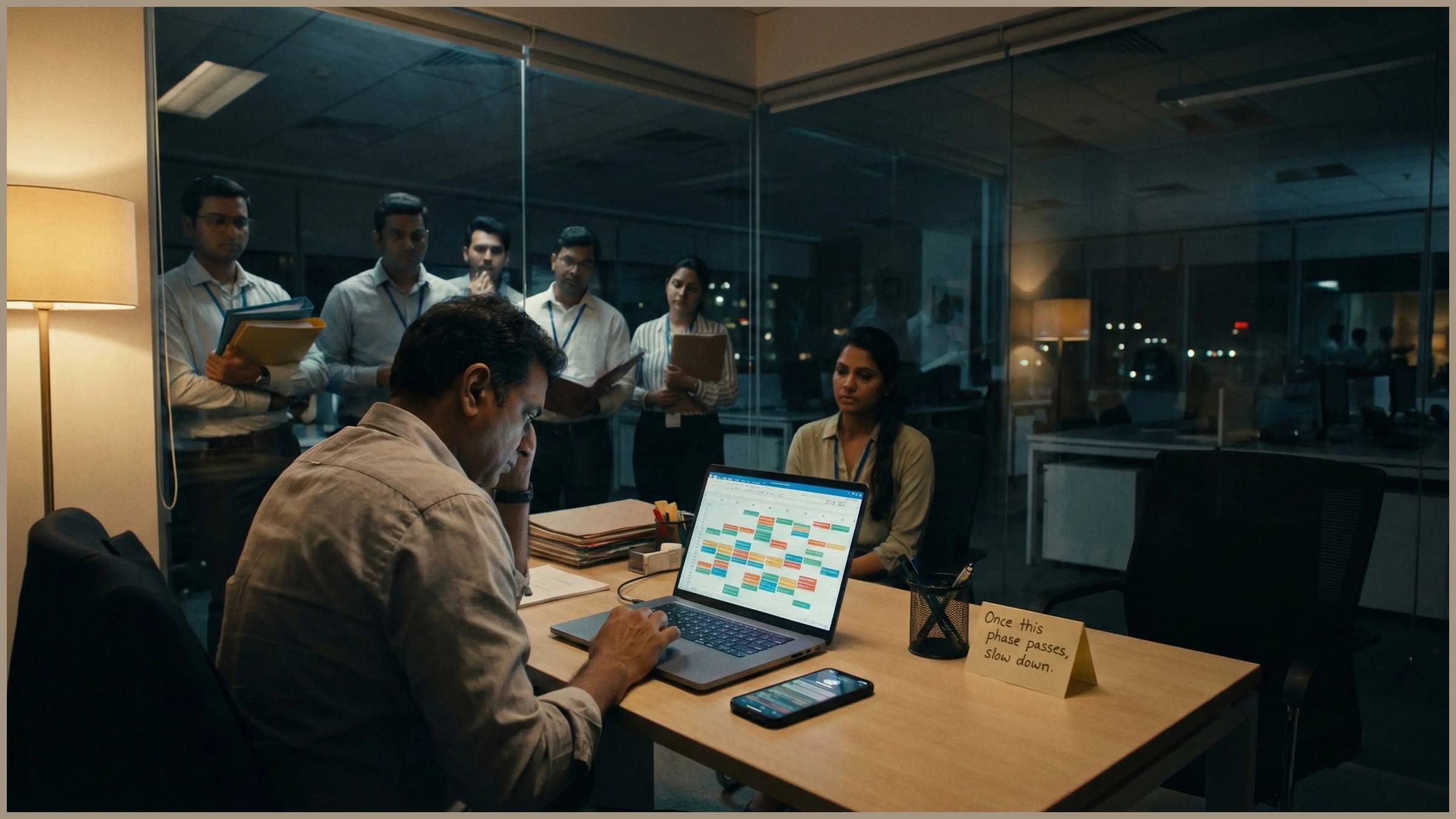
Meet Amit, founder and CEO of a fast-scaling services company.
From the outside, Amit looked unstoppable. Early mornings. Late nights. Always available. Always pushing.
The business was growing. But Amit’s energy wasn’t.
He was constantly tired, mentally stretched, and irritable. Decisions felt heavier. Patience was thinner. The fire that once drove him had turned into pressure.
Amit’s flaw wasn’t lack of discipline or passion. It was believing that personal sacrifice was the price of leadership.
When leadership becomes the bottleneck, exhaustion looks like commitment.
During a routine health check, Amit’s doctor asked a question that stayed with him: “You’re building a successful business. But who’s taking care of the person running it?”
That landed harder than any performance review.
Amit realized something uncomfortable: If he collapsed, the business would too.
Amit made changes small at first, then structural.
He:
Rebuilt his calendar around energy blocks, not just meetings
Stopped being the default decision-maker
Created leadership ownership so problems didn’t automatically travel upward
Protected thinking time, not just execution time
Within months:
His clarity returned
Decisions improved
Teams stepped up
Amit didn’t become less committed. He became more effective.
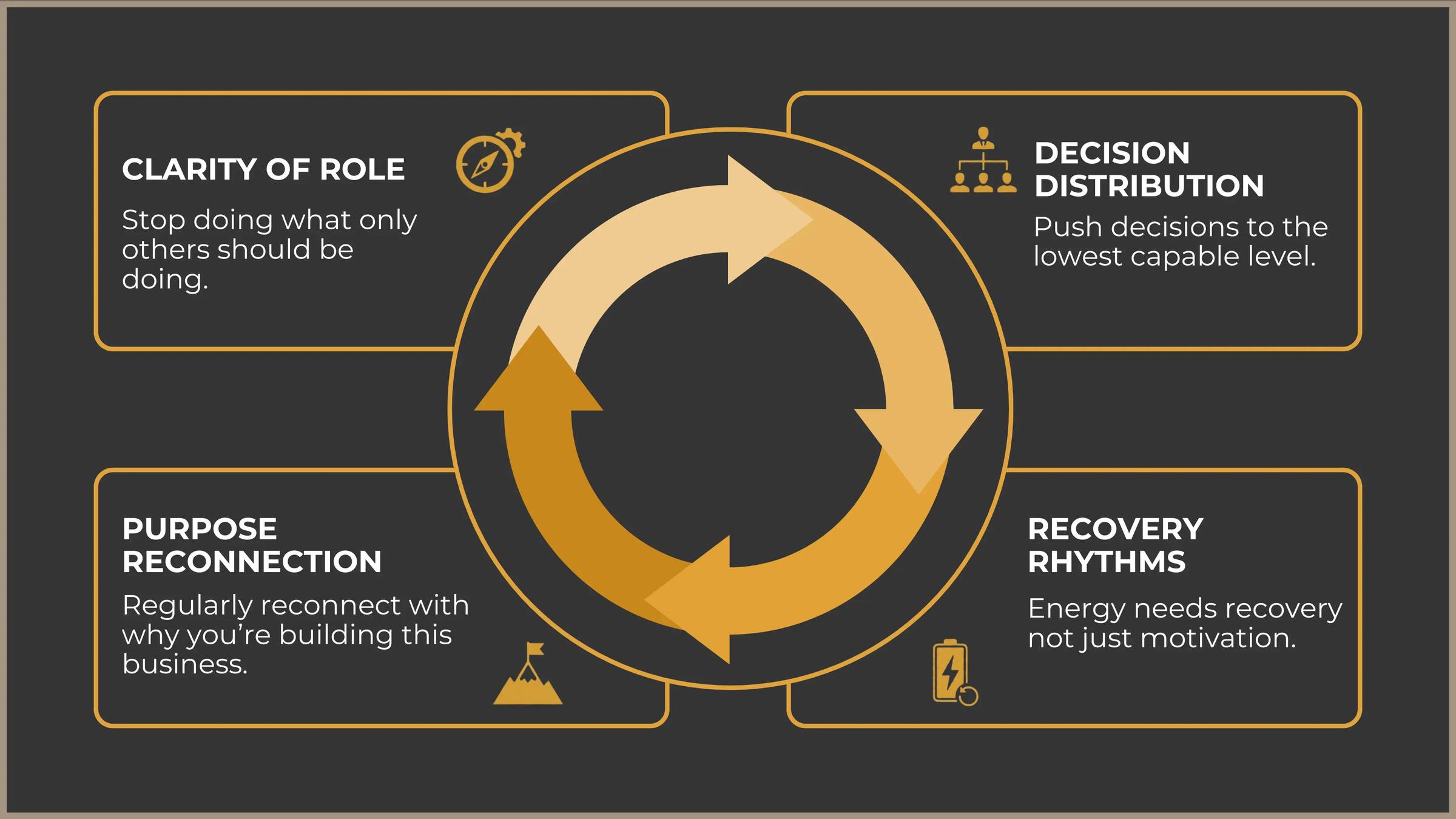
🧩 Our Solution: The Leadership Energy Flywheel
How leaders sustain performance without burnout
Message: Your business can only grow to the extent that you can sustain the role of leading it.
Burnout isn’t a badge of honor. It’s a signal that the system not the leader needs redesign.
Previous Newsletters:
If Everything Is Important, Nothing Is
Issue #16 | January 2026 Hello Reader, Most businesses don’t struggle because they lack ideas. They struggle because they’re trying to execute too many of them at once.
When There Are No Clear Answers, This Is How Leaders Decide
Issue #15 | Jan 2026 Hello Reader, At the CEO’s table, the hardest decisions are rarely between right and wrong. They’re between two incomplete truths ..….