He believed trust had to be earned before it could be given.
Managers stopped making decisions because approval felt safer than ownership. The more Sameer controlled, the less the organization took responsibility.
One weekend, Sameer visited his grandfather’s old farmhouse.
Walking through the orchard, he noticed the gardener watering young mango trees.
The gardener smiled and said,
“Trees don’t become strong because I hold them upright every day. They become strong because I trust their roots to do the work.”
That simple sentence stayed with him.
Later that evening, Sameer reflected on his own leadership.
Then it struck him.
He wasn’t growing leaders.
He was growing dependency.
By trying to prevent mistakes, he had unintentionally prevented growth.
The following month, Sameer changed his approach.
Instead of becoming the answer to every problem, he became the coach behind every decision.
Before giving advice, he started asking:
“What would you do?”
“What options have you considered?”
“What’s the worst that could happen?”
He stopped measuring leaders by whether they made mistakes.
He started measuring them by whether they learned from them.
Gradually, managers stopped asking for permission.
They started bringing recommendations.
Meetings became discussions instead of approvals.
Confidence spread through the leadership team.
And something remarkable happened.
Sameer discovered that trust wasn’t the reward for capability.
Trust was the environment where capability was developed.
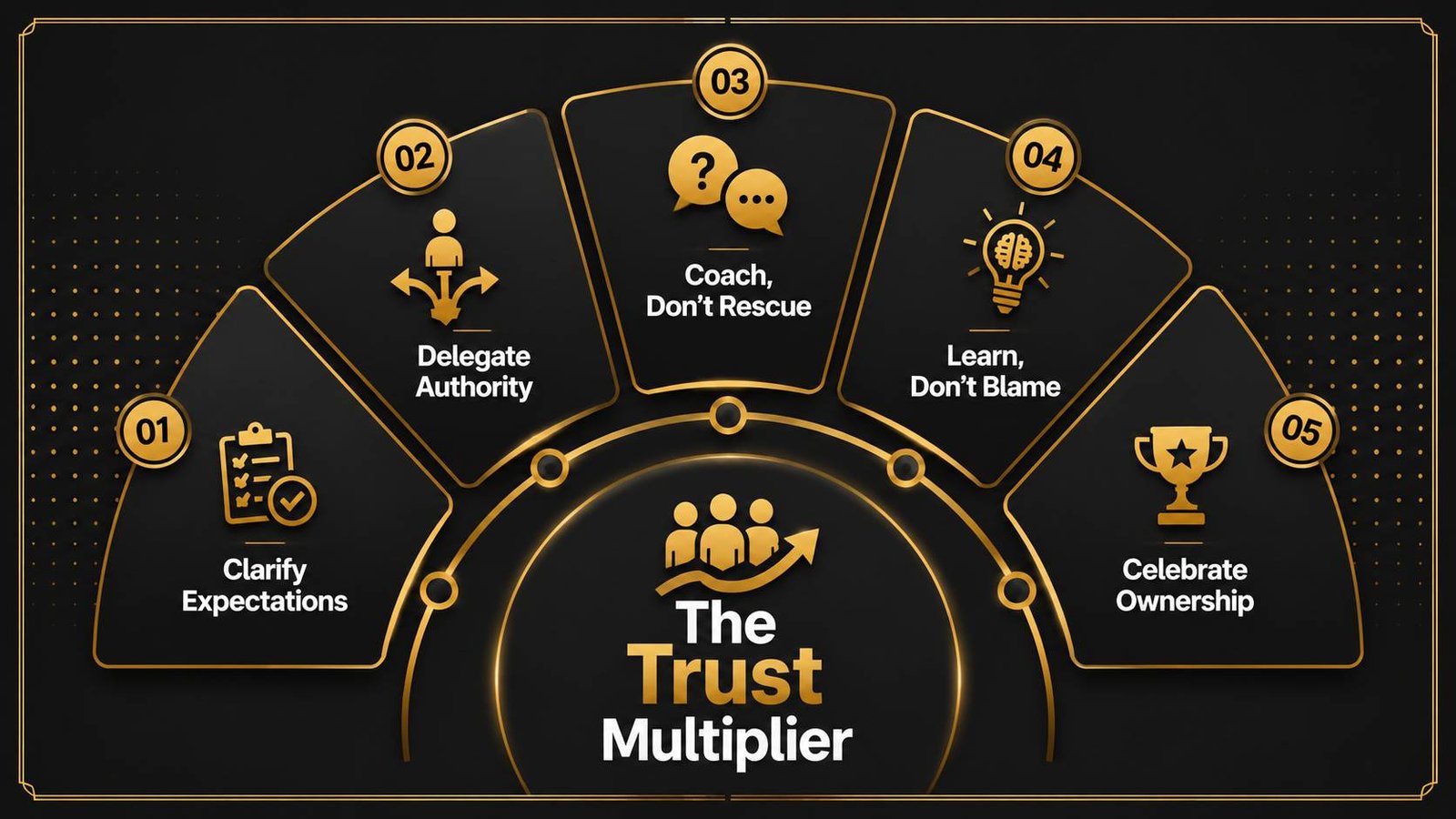
🧩 My Solution: The Trust Multiplier
Five leadership behaviors that turn dependence into ownership.
Message: Many leaders believe they have a people problem.
Often, they have a trust problem.
Because the organization will never grow beyond the level of trust its leader is willing to extend.
The fastest way to build a stronger business isn’t by checking more.
It’s by creating more people who no longer need to be checked.
Previous Newsletters:
The Greatest Threat to Your Business Is Yesterday’s Success
Issue #28 | July 2026 Hello Reader, The biggest threat to your business isn’t competition, technology, or the economy. It’s yesterday’s success. Success has a dangerous habit. It convinces leaders that the formula which got them here will take them there. History tells us otherwise….
Issue #27 | July 2026 Hello Reader, There was a time when businesses won by owning everything. Today, the winners are often the ones who know what not to own. Because in a connected world: Growth is no longer about the strength of your company alone. It’s about the strength of the ecosystem around it.