Boardroom Thinking Begins When Operational Thinking Ends
Issue #26 | June 2026
Hello Reader,
Most businesses don’t struggle because leaders work too little.
They struggle because leaders stay trapped in operational thinking long after the business needs enterprise thinking.
At some stage, leadership must evolve from:
“How do we run the company?” to “How do we strengthen the institution?”
That shift changes everything.
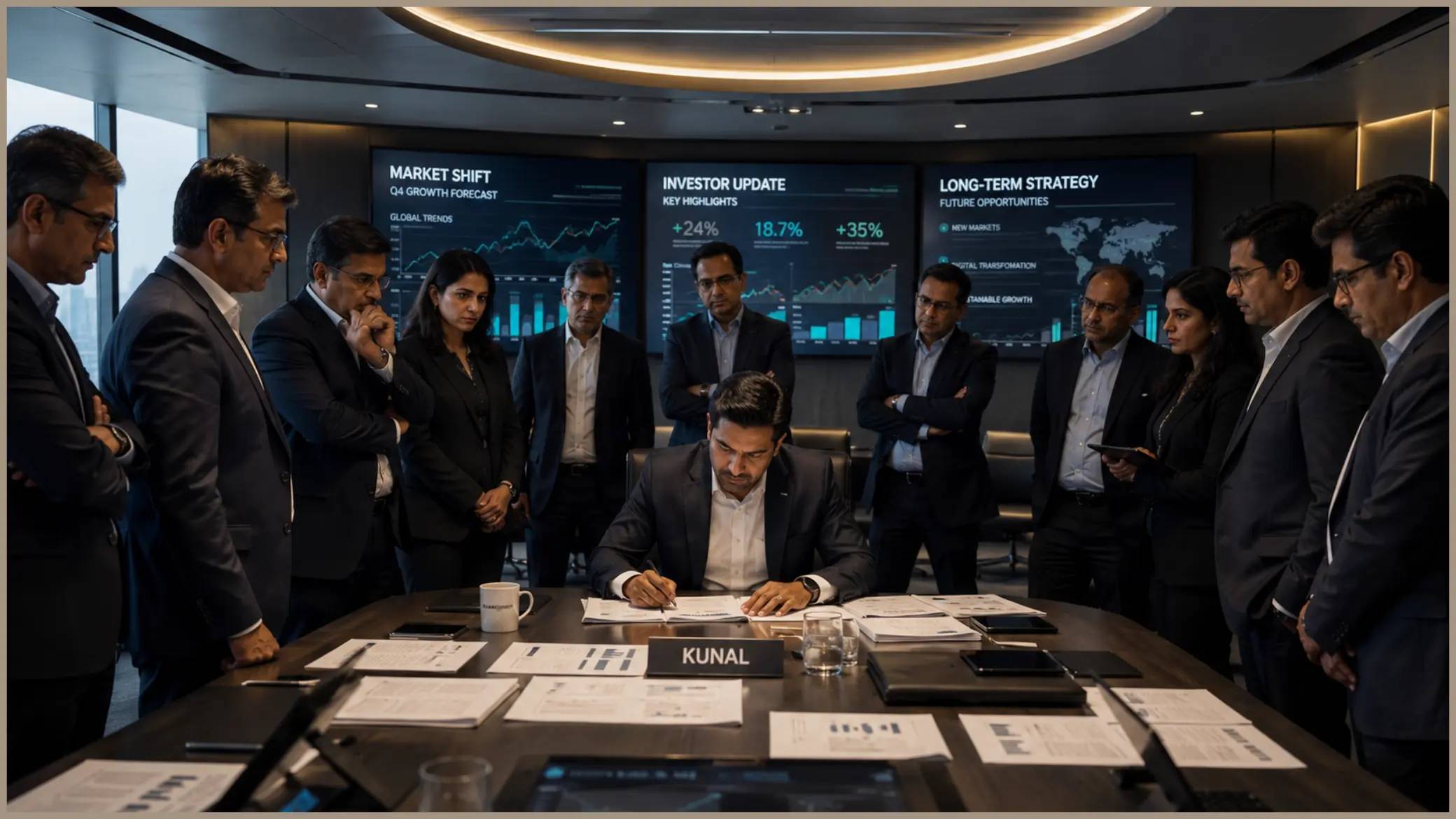
Meet Kunal, founder and CEO of a successful industrial business.
For years, his leadership style had worked brilliantly.
He knew every customer personally. Reviewed every major decision. Solved problems faster than anyone else in the company.
And because of that, the business grew rapidly.
But as the company expanded:
investors became more involved,
governance expectations increased,
leadership layers deepened,
and market complexity intensified.
Yet Kunal still approached leadership the same way: through operational control.
His flaw wasn’t capability.
It was that he was still thinking like a high-performing operator in a business that now required an enterprise leader.
When leadership stays trapped in execution, strategy never gets the altitude it needs.
During a board strategy session, an independent director asked Kunal a question that stayed with him:
“Are you spending your energy running the business… or strengthening the business’s future?”
That question created discomfort.
Because Kunal realized something important:
Operators focus on:
efficiency,
execution,
and immediate outcomes.
Enterprise leaders focus on:
resilience,
strategic positioning,
governance,
and continuity.
The business no longer needed him to be the best operator in the room.
It needed him to think at a higher level.
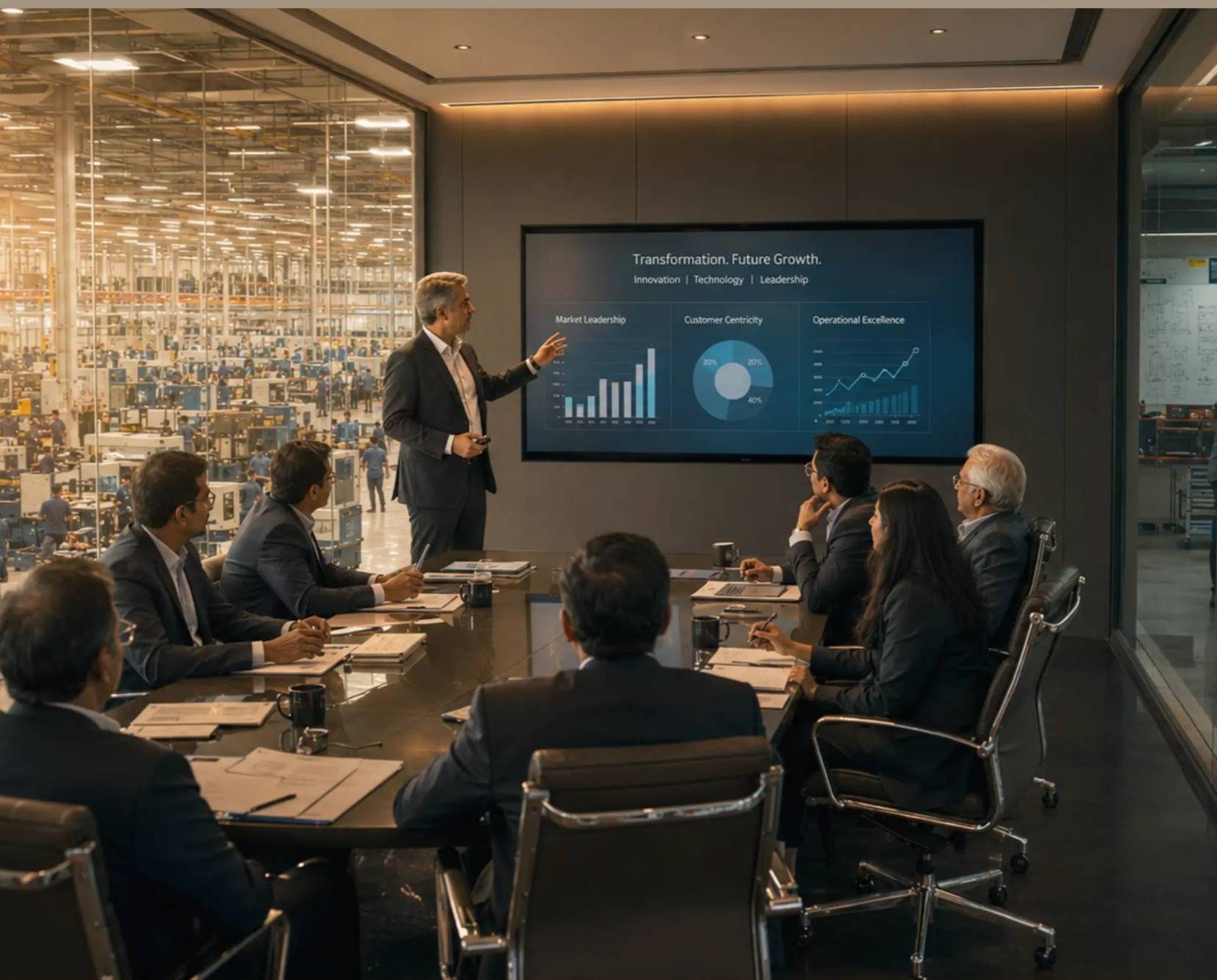
Kunal began changing how he led.
He:
shifted operational ownership deeper into the organization,
elevated leadership conversations toward long-term risks and opportunities,
strengthened governance structures,
and spent more time on market positioning, leadership succession, and future capability building.
Slowly, the organization matured.
Board meetings became strategic instead of tactical. Leaders became more autonomous. The business became more resilient.
Kunal realized:
Great operators build successful companies. Great enterprise leaders build businesses that endure.
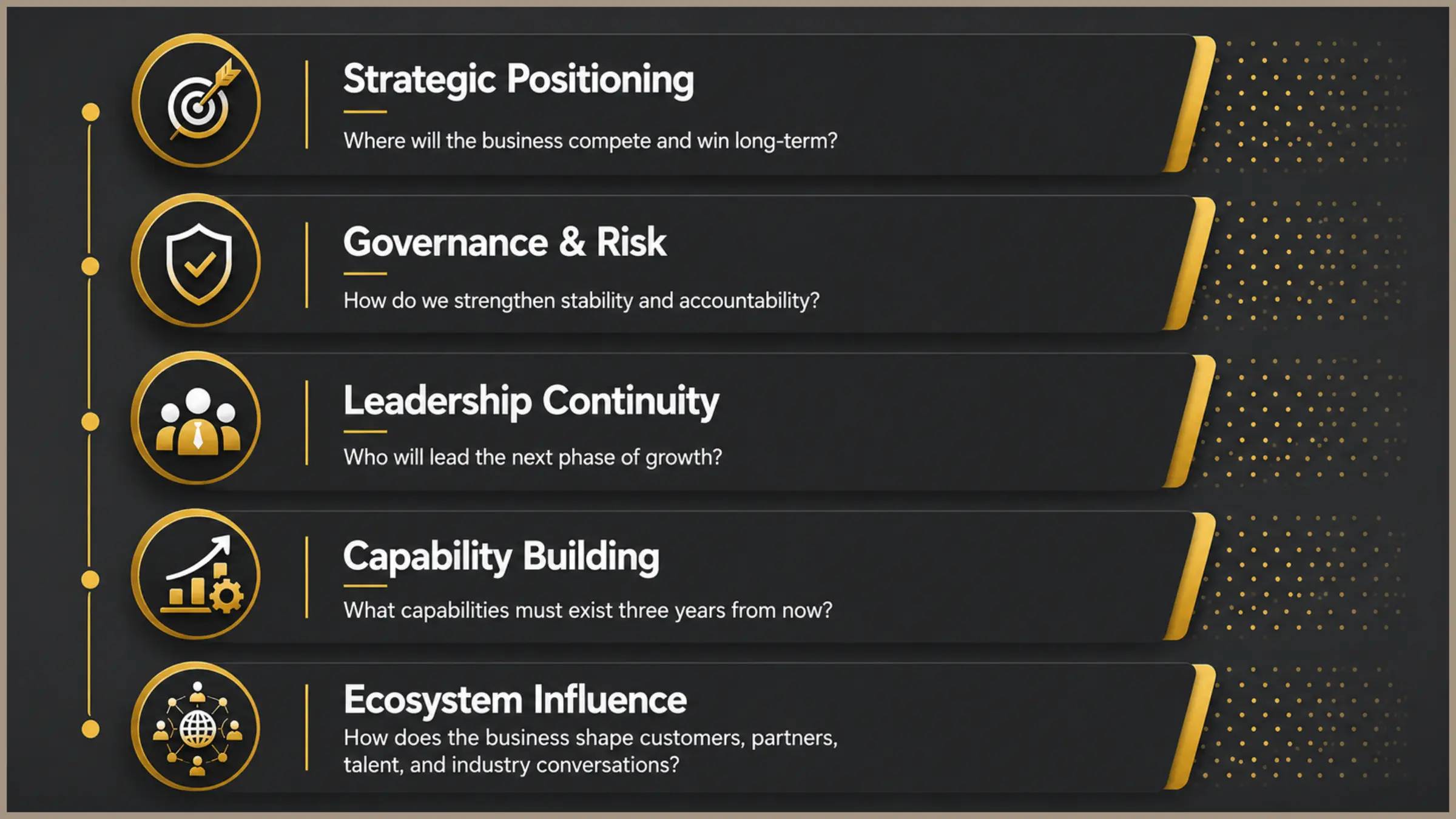
🧩 My Solution: The Enterprise Leadership Lens
To transition from operator → enterprise leader, leaders must focus on these five dimensions
Message: Operators optimize the present.
Enterprise leaders prepare the future.
And eventually, every growing business reaches a point where:
Success depends less on how well the company is run… and more on how well it is positioned to endure, evolve, and outlast its current leaders.
Previous Newsletters:
What You Fund Today Quietly Shapes Tomorrow
Issue #25 | June 2026 Hello Reader, Most leaders believe strategy is revealed in presentations. It isn’t. Strategy is revealed in something far more honest. Where you choose to put money, time, and attention. Because no matter what the leadership team says is important…
Issue #24 | May 2026 Hello Reader, Every business eventually faces a defining question: Are you building a company that performs…or an institution that endures?.